
Serialization And Envelope Limits
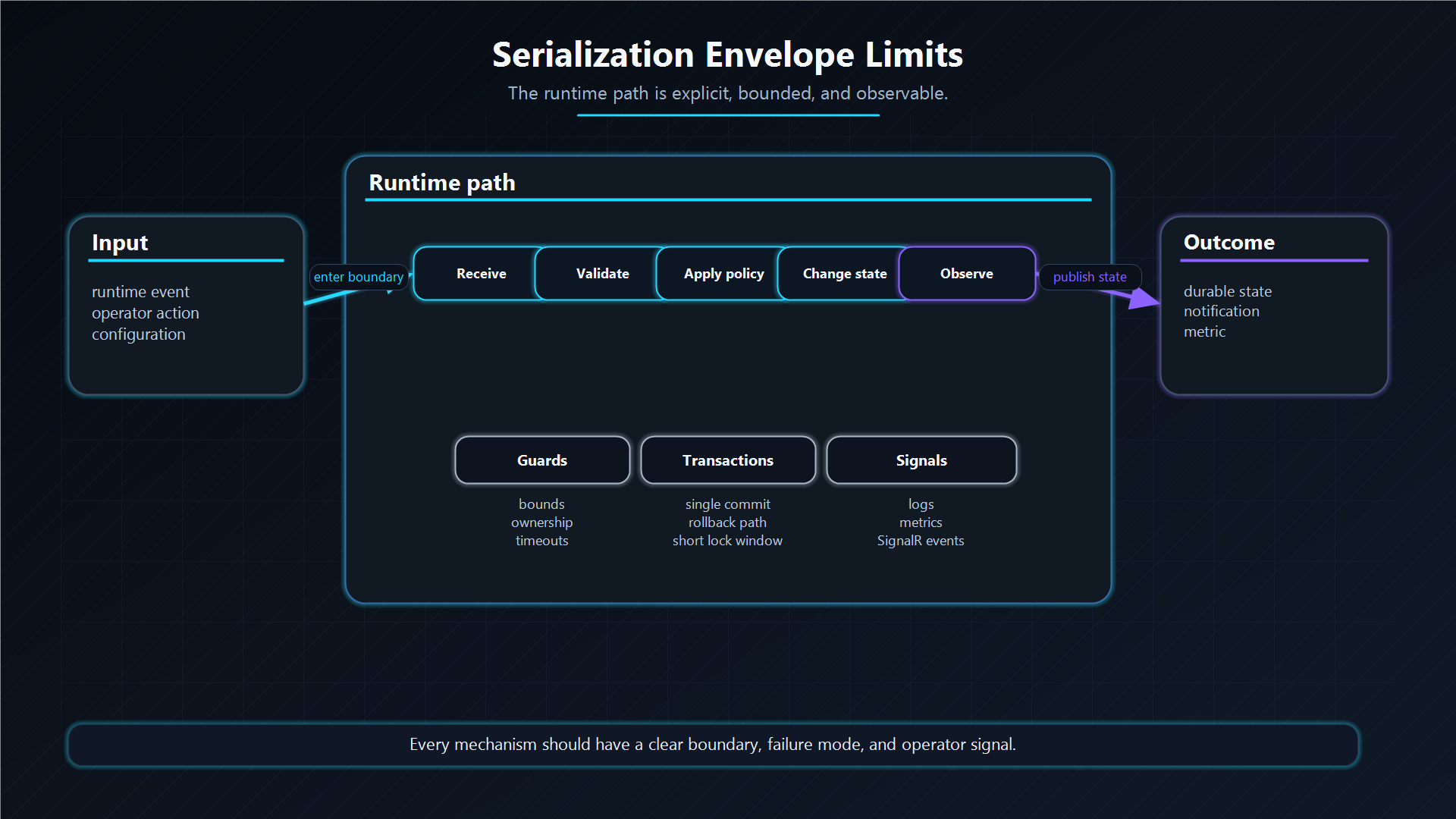
Serialization превращает typed job object в durable payload text. Envelope validation защищает storage contract вокруг этого payload: queue name, type key, creator, tags, idempotency key и payload size.
Payload - это business data. Envelope - routing и operational metadata ChokaQ.
Где это находится
| Area | Runtime type |
|---|---|
| JSON serializer | SystemTextJsonChokaQJobSerializer |
| Serializer options | ChokaQSerializationOptions |
| Envelope validation | ChokaQEnvelopeLimits |
| Type key lookup | JobTypeRegistry |
Payload serialization
Bus mode serializes job DTO через System.Text.Json с configured serializer options. Во время dispatch persisted type key resolves в CLR type, а payload deserializes в этот type.
Pipe mode сохраняет payload как raw JSON/text и передает его одному global pipe handler.
Envelope limits
ChokaQ validates:
| Field | Limit |
|---|---|
| Queue | 255 characters |
| Type key | 255 characters |
| CreatedBy | 100 characters |
| Tags | 1000 characters |
| Idempotency key | 255 characters |
| Payload | Serialization.MaxPayloadBytes |
Эти limits соответствуют storage reality и предотвращают accidental unbounded operational metadata.
Contract versioning
Persisted payloads могут жить дольше deployments. Относитесь к job DTOs как к message contracts:
- предпочитайте additive changes;
- не rename'ьте required fields без compatibility plan;
- используйте semantic type keys вроде
email.send.v1; - register
v2side by side при breaking payload shape; - держите old handlers, пока old rows не drain'ятся или не migrated.
Архитектурное решение
Почему этот pattern?
ChokaQ использует простой JSON payload contract, потому что он inspectable в SQL и The Deck, его удобно version'ить, и он естественен для .NET applications.
Trade-offs
JSON больше binary formats и schema compatibility остается developer discipline. Выигрыш - operational readability и меньшая dependency burden.
Рассмотренные альтернативы
| Alternative | Benefit | Cost |
|---|---|---|
| Binary serialization | Меньше/быстрее. | Сложнее inspection и version debugging. |
| Persist CLR object graph | Convenient. | Fragile across deployments. |
| External schema registry | Strong governance. | Больше infrastructure и friction для preview scope. |
Дополнительные вопросы
Почему validate envelope length before storage?
Потому что database columns и indexes имеют конечные limits. Fail early дает clear errors вместо SQL truncation или index failures.
Почему semantic type keys?
Потому что serialized rows живут дольше CLR refactors.
Какая breaking-change strategy?
Register new type key, держать old handlers во время migration, затем retire old contracts после retention или explicit migration.