
SQL Query Reference
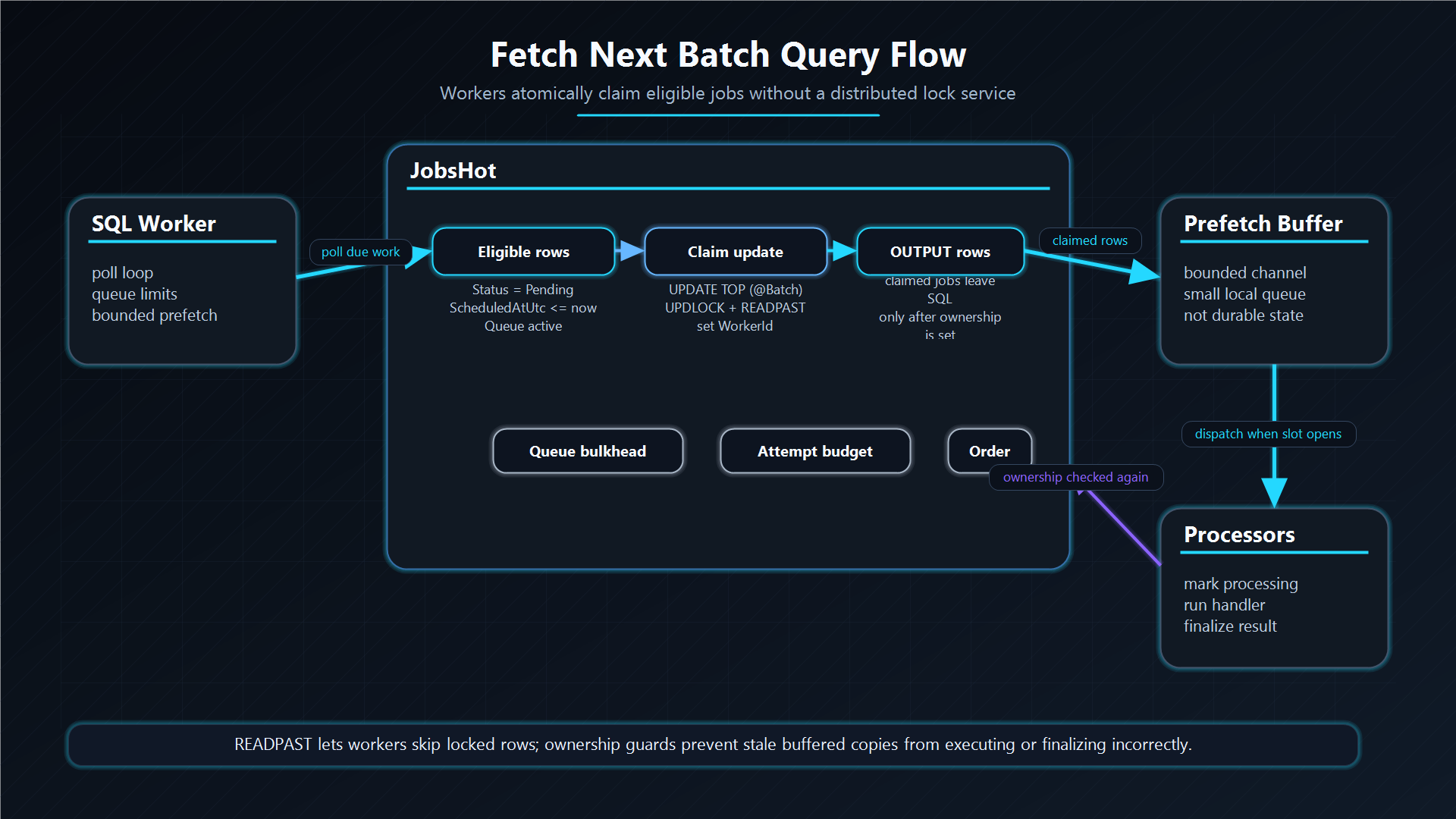
Эта страница объясняет runtime intent важных SQL operations. Она не заменяет Queries.cs; это архитектурный guide по набору queries.
Fetch Next Batch
Caller: SqlJobStorage.FetchNextBatchAsync из SqlJobWorker.FetcherLoopAsync.
Intent: claim eligible pending rows из JobsHot без blocking других workers и без превышения per-queue worker budgets.
Tables touched:
JobsHotQueues
Key behavior:
ActiveCountsсчитает fetched/processing rows per queue.Candidatesнаходит pending rows, которые due и не paused.ROW_NUMBER()ранжирует candidates внутри каждой queue.UPDLOCK, READPASTпозволяет workers пропускать rows, которые уже claim'ятся.UPDATE ... OUTPUT inserted.*claim'ит rows и возвращает claimed data.
Failure mode: если eligible rows нет, worker sleeps на PollingInterval. Если SQL call transiently fails, storage retry policy может retry'ть operation.
Mark As Processing
Caller: JobProcessor через IJobStateManager.
Intent: превратить fetched row в execution lease прямо перед запуском user code.
Tables touched:
JobsHot
Key behavior:
- Устанавливает
Status = Processing. - Увеличивает
AttemptCount. - Устанавливает
StartedAtUtc. - Инициализирует
HeartbeatUtc. - Требует matching
WorkerIdиFetchedstatus, когда worker ownership передан.
Это последний stale-prefetch guard. Если row была released, reclaimed или changed после fetch, update затронет zero rows, и user code не запустится.
Keep Alive
Caller: job heartbeat loop во время processing.
Intent: обновить HeartbeatUtc, чтобы zombie rescue знал, что job все еще alive.
Tables touched:
JobsHot
Failure mode: repeated heartbeat write failures логируются и считаются. В зависимости от configuration execution может продолжиться или быть cancelled после threshold.
Archive Succeeded
Caller: JobProcessor после успешного завершения handler.
Intent: atomically move completed job из active work в history.
Tables touched:
JobsHotJobsArchiveStatsSummaryMetricBuckets
Key behavior:
- Starts короткую transaction с
XACT_ABORT ON. - Deletes exact row from
JobsHot. - Captures deleted data в table variable через
OUTPUT. - Inserts captured data в
JobsArchive. - Updates lifetime counters.
- Updates rolling metric buckets.
- Commits только если весь move успешен.
Reschedule For Retry
Caller: JobStateManager после retryable failure или open circuit.
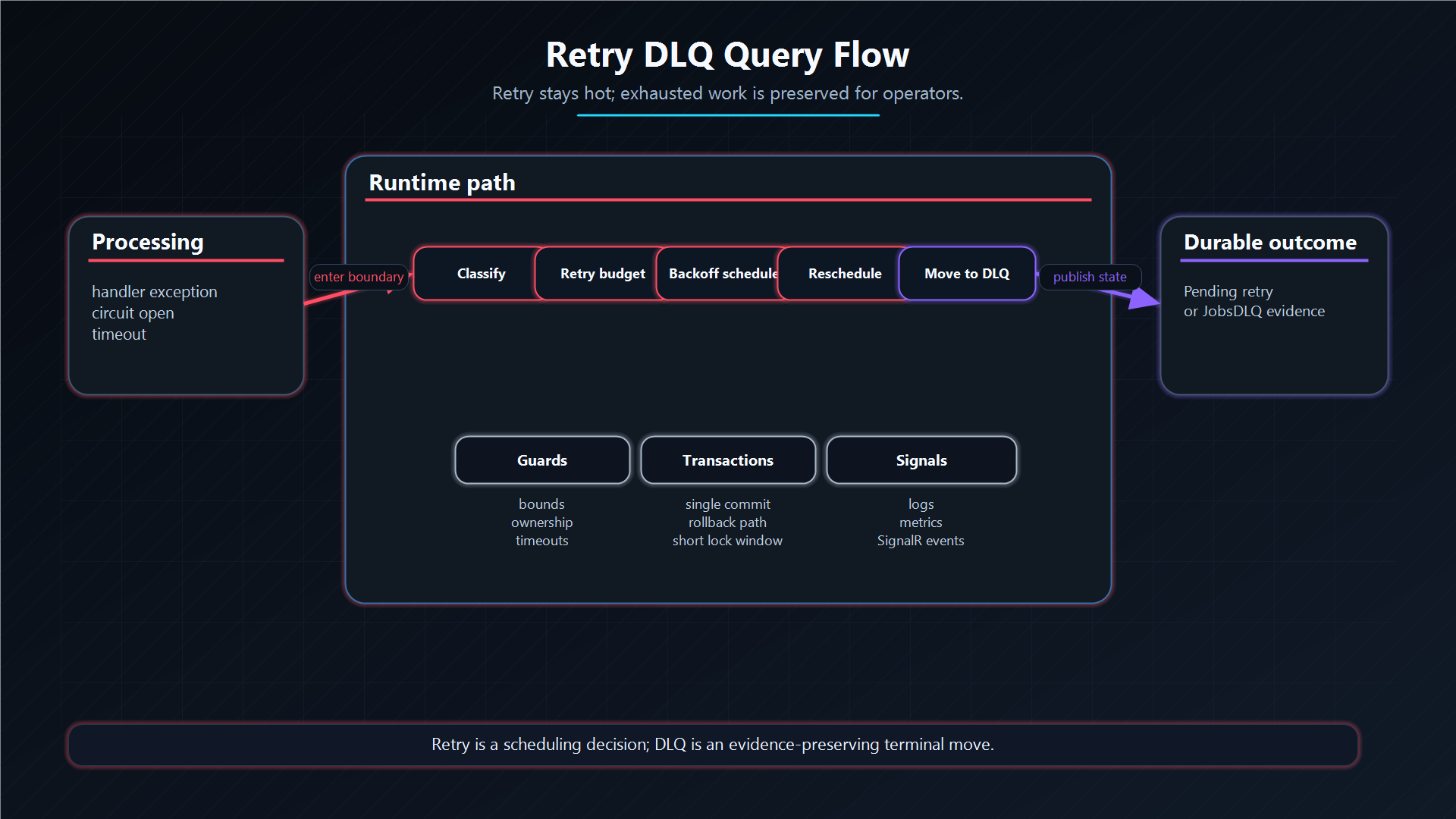
Intent: оставить job в JobsHot, вернуть его в pending и запланировать future retry.
Tables touched:
JobsHotStatsSummary
Key behavior:
- Status становится pending.
- Worker ownership очищается.
ScheduledAtUtcустанавливается в рассчитанное retry time.- Retry counters обновляются для operator visibility.
Move To DLQ
Caller: failure finalization, cancellation, zombie rescue и admin paths.
Intent: atomically remove job из active execution и сохранить его для operator inspection.
Tables touched:
JobsHotJobsDLQStatsSummaryMetricBuckets
Pattern зеркалит Archive: delete from Hot, capture deleted row, insert into DLQ, update counters и metric buckets в той же transaction.
Resurrect
Caller: The Deck или storage API.
Intent: atomically move DLQ job обратно в active work.
Tables touched:
JobsDLQJobsHotStatsSummary
Key behavior:
- Сначала deletes from
JobsDLQ. - Inserts into
JobsHotсо status pending и reset attempt count. - Optional applies edited payload/tags/priority.
- Rolls back DLQ delete, если Hot insert fails.
Recover Abandoned
Caller: ZombieRescueService.
Intent: release fetched rows, которые так и не дошли до processing.
Tables touched:
JobsHot
Fetched rows еще не выполняли user code. Если они висят слишком долго, система может безопасно reset'нуть их в pending, очистив WorkerId и установив Status = 0.
Archive Zombies
Caller: ZombieRescueService.
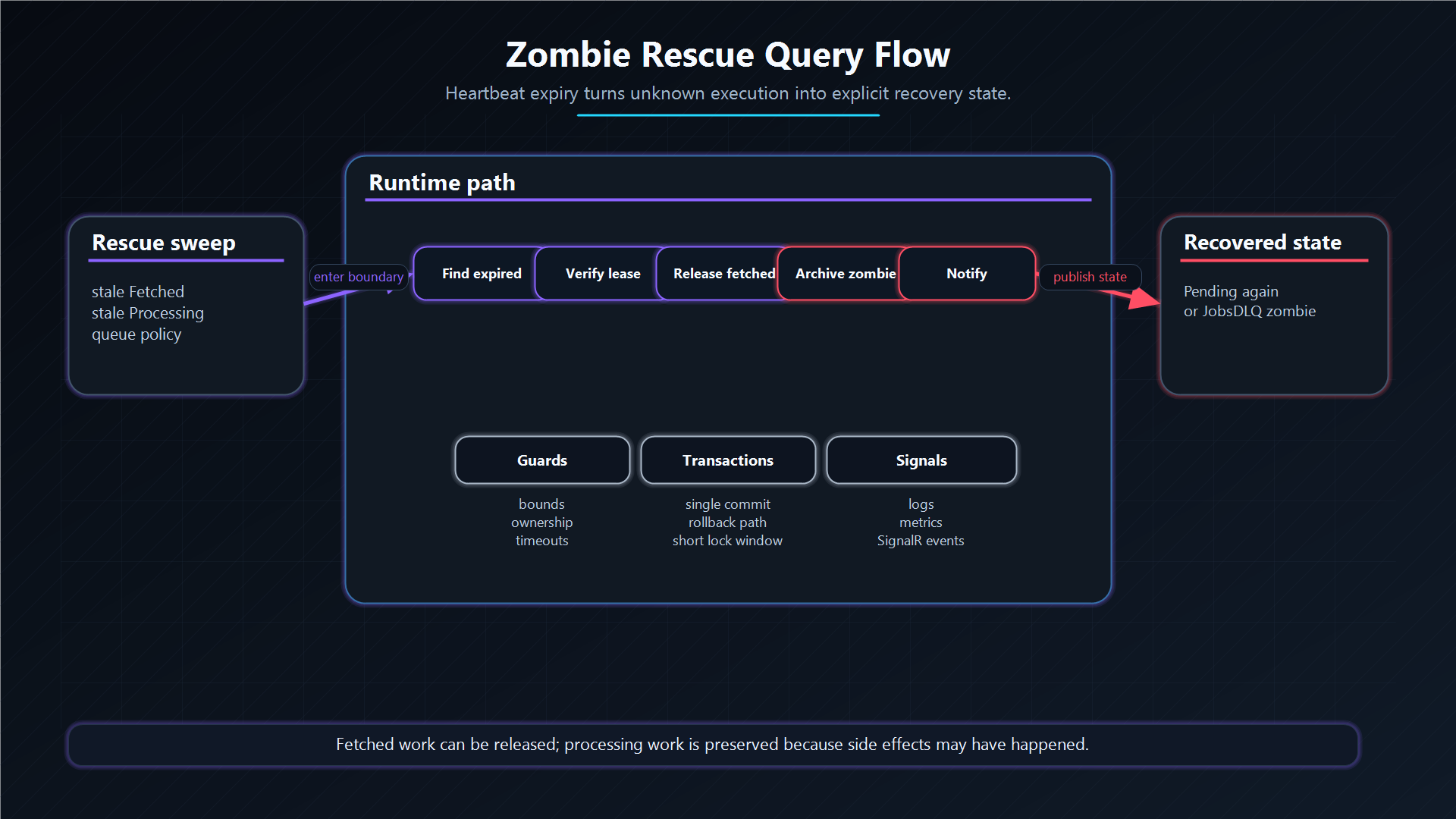
Intent: move processing rows с expired heartbeat в DLQ.
Tables touched:
JobsHotJobsDLQStatsSummaryMetricBucketsQueues
Processing zombies не retry'ятся автоматически, потому что user code мог уже произвести side effects.
Dashboard Reads
Dashboard queries используют bounded, purpose-specific reads:
| Query | Purpose |
|---|---|
GetSummaryStats | Global lifetime counts. |
GetQueueStats | Per-queue status counts and totals. |
GetQueueHealth | Queue lag and pending saturation. |
GetThroughputStats | Recent rate from MetricBuckets. |
GetTopDlqErrors | Bounded recent DLQ error grouping. |
GetArchivePaged | Committed archive page. |
GetDLQPaged | Committed DLQ page. |
Telemetry reads могут использовать approximate committed snapshots там, где exactness не является частью safety contract. State transitions не полагаются на эти snapshots.
Архитектурное решение
Почему этот pattern?
Database - coordination boundary. Workers не координируются через process memory или distributed locks; они claim'ят rows через SQL state changes.
Trade-offs
SQL coordination прозрачна и durable, но database становится central performance boundary. Поэтому index design, short transactions и bounded dashboard queries являются частью runtime contract.
Рассмотренные альтернативы
| Alternative | Benefit | Cost |
|---|---|---|
| Distributed lock service | Explicit lease control. | Дополнительная infrastructure и еще один failure mode. |
| Broker visibility timeout | Proven queue primitive. | Менее прямой SQL inspection и другая operational model. |
| App-level copy/delete | Легко написать. | Небезопасные cross-table moves при crash/failure. |
Дополнительные вопросы
Почему использовать UPDATE ... OUTPUT для fetch?
Потому что claiming и return exact claimed rows должны быть одной operation.
Что защищает от stale prefetched work?MarkAsProcessing проверяет worker ownership непосредственно перед dispatch.
Dashboard NOLOCK reads используются для correctness?
Нет. Они только для observational views. Correctness обеспечивается state transition predicates и transactions.