
Type Resolution
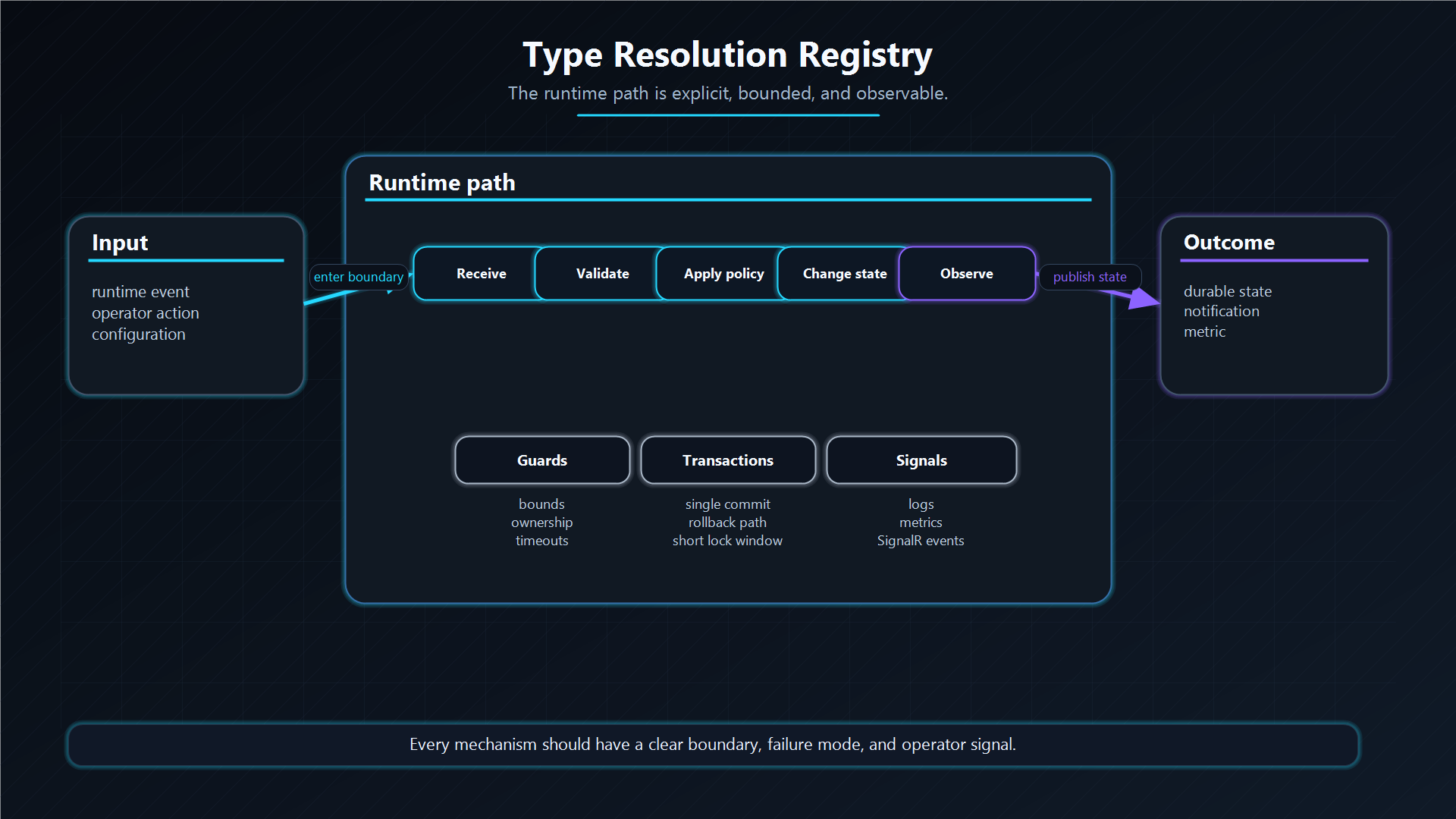
Type resolution is how ChokaQ maps a persisted string key in SQL to a .NET job type at runtime.
The persisted key is the durable contract. The CLR type is an implementation detail that can be renamed, moved, or versioned.
Where It Lives
JobTypeRegistry maintains two mappings:
| Direction | Use |
|---|---|
| key to type | Worker dispatch when reading persisted jobs. |
| type to key | Enqueue path when serializing a new job. |
Profiles populate the registry at startup.
Recommended Keys
Use semantic versioned keys:
CreateJob<SendEmailJob, EmailHandler>("email.send.v1");
CreateJob<CapturePaymentJob, CapturePaymentHandler>("billing.capture-payment.v1");
Avoid persisting short CLR names such as SendEmailJob. They are convenient until a namespace, assembly, or class name changes.
Strict Mode
ChokaQ:TypeResolution:RequireRegisteredJobTypes controls whether unregistered job types are allowed.
Strict registration is safer for production:
- startup profiles define the contract surface;
- unknown SQL rows fail clearly;
- refactors do not silently change persistence keys.
Compatibility fallback can use assembly-qualified names, but that couples stored jobs to CLR identity.
Failure Modes
| Failure | Cause | Fix |
|---|---|---|
| Unknown type key | Profile missing or wrong key. | Register the key or migrate the row. |
| Duplicate key | Two profiles claim same key. | Make keys globally unique. |
| Old row after refactor | CLR fallback key changed. | Use semantic keys and migration strategy. |
| Payload mismatch | Type resolved but payload contract changed. | Version type keys and payload DTOs. |
Architecture Decision
Why this pattern?
Durable jobs outlive code deployments. A stable string contract is safer than persisting raw CLR identity as the primary dispatch mechanism.
Trade-offs
Semantic keys require discipline. Developers must version contracts and keep old handlers available during migration windows.
Alternatives considered
| Alternative | Benefit | Cost |
|---|---|---|
| Persist CLR type name | Easy at first. | Breaks on refactor and assembly changes. |
| Store only numeric type IDs | Compact. | Requires central registry and harder debugging. |
| Dynamic assembly scanning | Flexible. | Slow, unsafe, and unpredictable in trimmed/AOT hosts. |
Additional Questions
Why not persist CLR type names?
Because SQL rows can outlive refactors. Persisted contracts should be stable across code movement.
How do you roll out v2 payloads?
Register a new type key, keep v1 handler support until old rows drain, then retire the old key through an explicit migration/retention plan.
What should happen to an unknown type key?
It should fail visibly and be operator-diagnosable, not dispatch to an unsafe fallback silently.