
The Deck Panel Guide
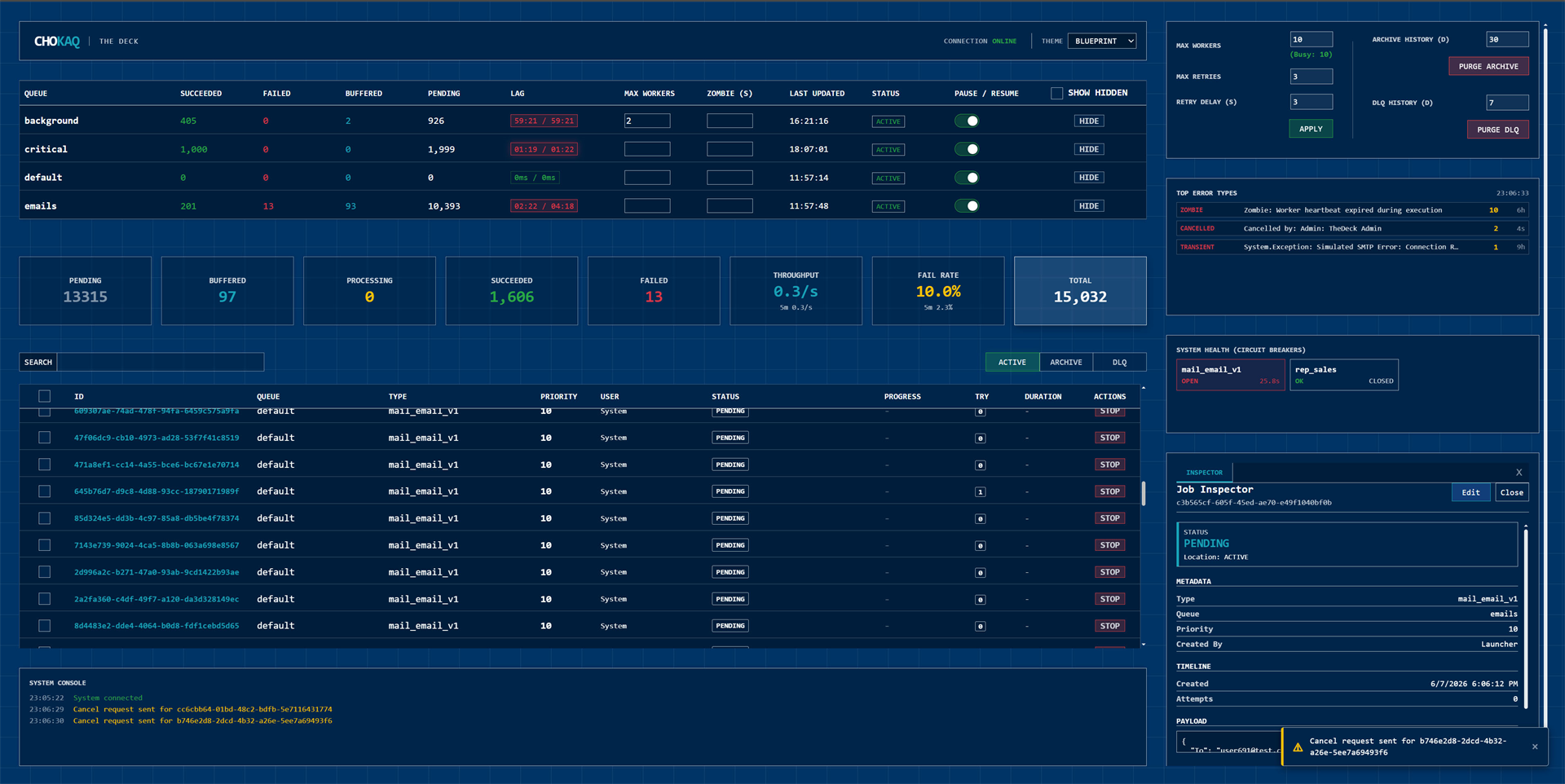
The Deck is the operational surface for ChokaQ. It exists for the moment when a queue is not just a data structure, but a live production system with lag, failures, retries, stalled work, and operator decisions.
For security boundaries, see Authorization Model. For mutation safety, see Destructive Actions. For live updates, see SignalR Notification Contract.
Dashboard Areas
| Area | Purpose |
|---|---|
| Stats | Global throughput, success/failure counts, and recent activity. |
| Health | Queue lag, worker liveness, SQL connectivity, and saturation signals. |
| Queues | Per-queue pause state, max worker controls, zombie timeout controls. |
| Circuits | Circuit breaker state and failure protection visibility. |
| Job Matrix | Active, archive, and DLQ job inspection. |
| Ops Panel | Payload inspection, edit, resurrection, and bulk operations. |
| Console Log | Operator-visible runtime events and admin action feedback. |
Queue Controls
The queue panel is not a decoration. It changes runtime behavior.
| Control | Effect | Risk |
|---|---|---|
| Pause queue | Workers stop fetching new work for that queue. | Existing processing work may continue. |
| Max workers | Caps concurrent fetched/processing work per queue. | Too low creates lag; too high can overload downstream. |
| Zombie timeout | Overrides global processing heartbeat timeout. | Too low can DLQ healthy long-running jobs. |
Operators should treat queue controls as production throttles.
Job Matrix
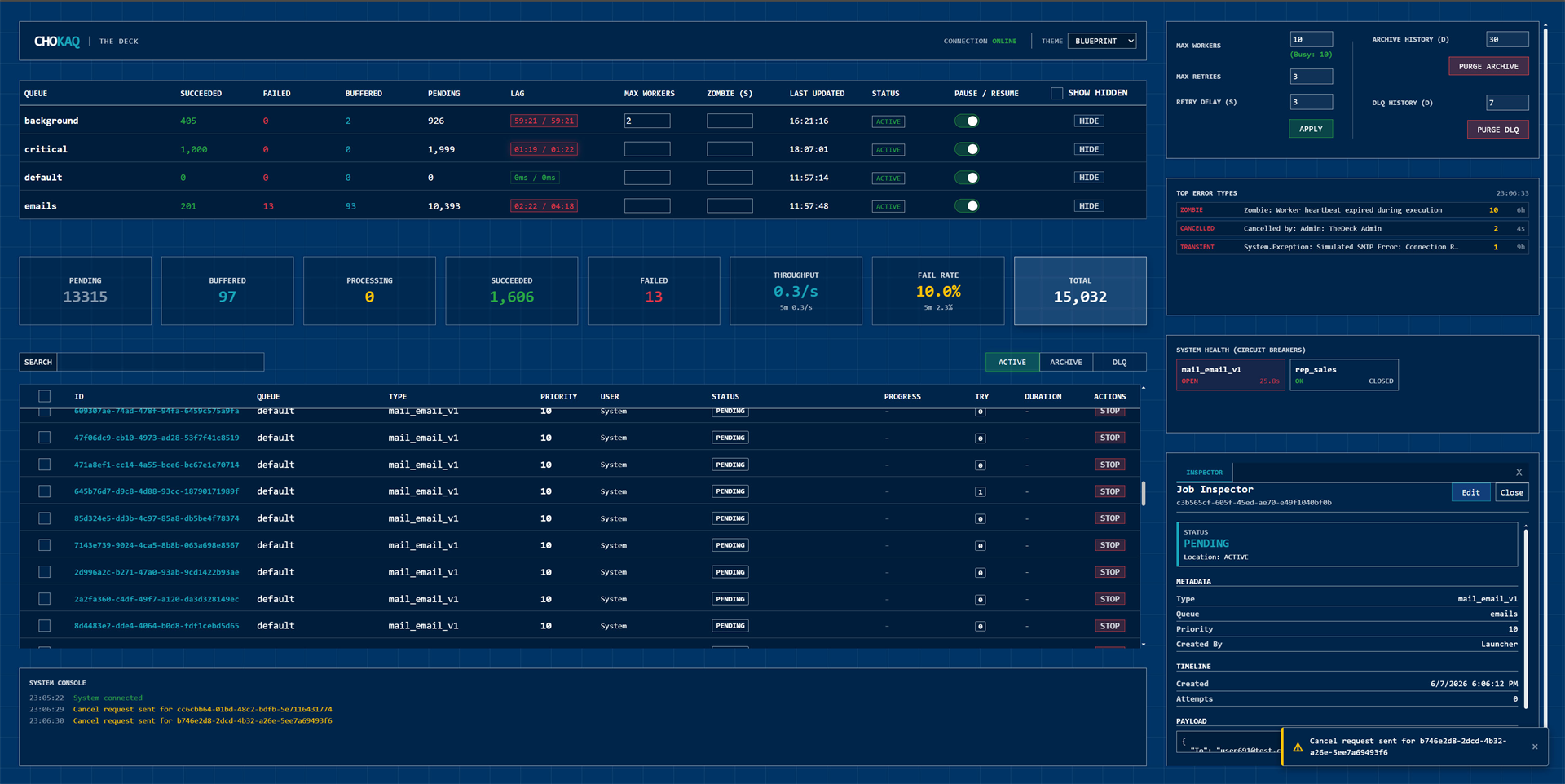
The Job Matrix is the main inspection surface.
For history query behavior, see Paging, Sorting And Filtering.
| Source | What it shows | Typical action |
|---|---|---|
| Active | Pending, fetched, processing, delayed retry. | Confirm progress or cancel safe jobs. |
| Archive | Succeeded jobs. | Audit and confirm completion. |
| DLQ | Failed/cancelled/zombie jobs. | Inspect, edit, resurrect, or purge. |
Job Details
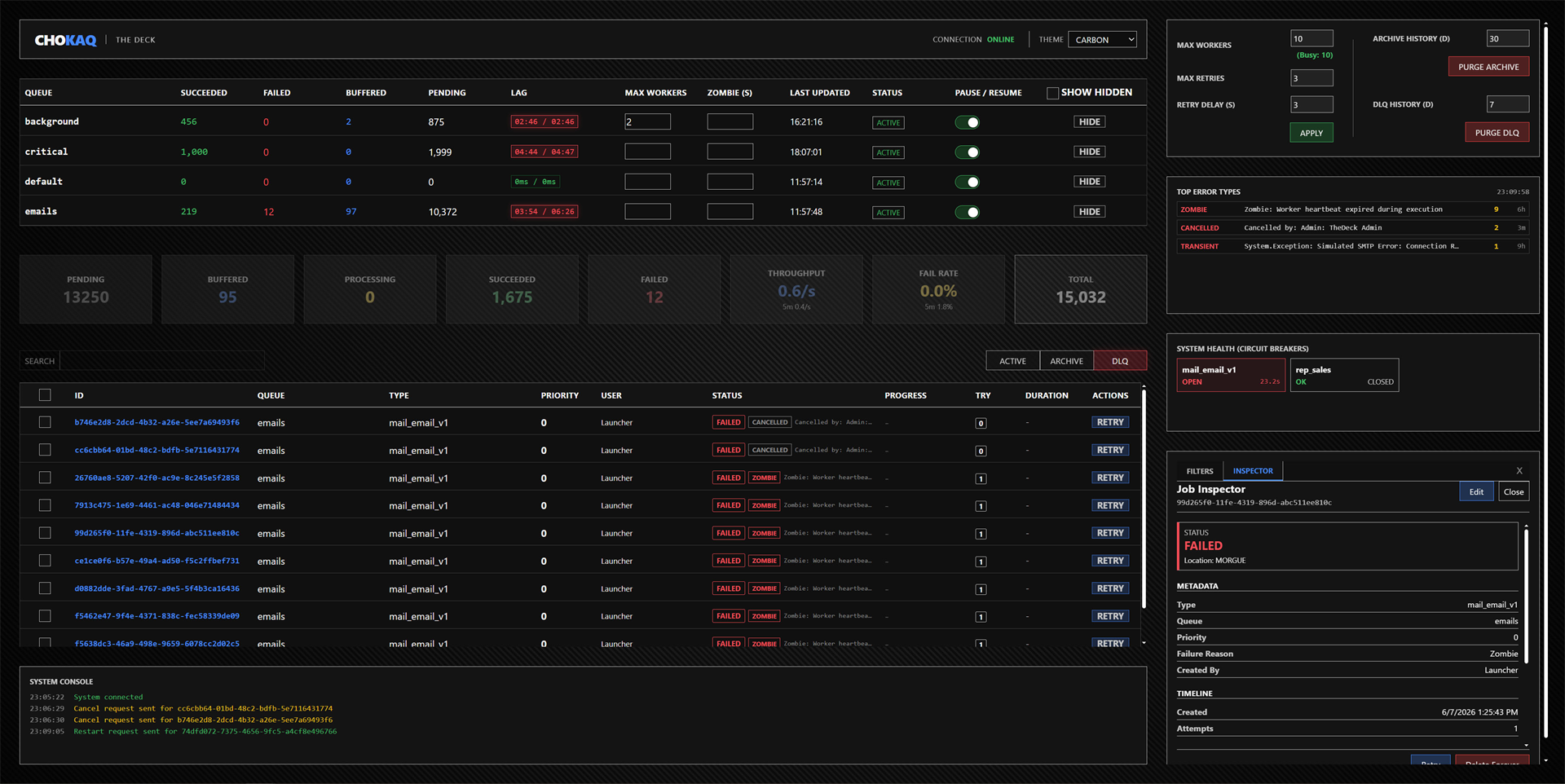
Job details should answer:
- what job type is this;
- which queue owns it;
- what payload was stored;
- how many attempts ran;
- when it was created/scheduled/started/finished;
- which worker owned it;
- why it failed;
- whether resurrection is safe.
DLQ Actions
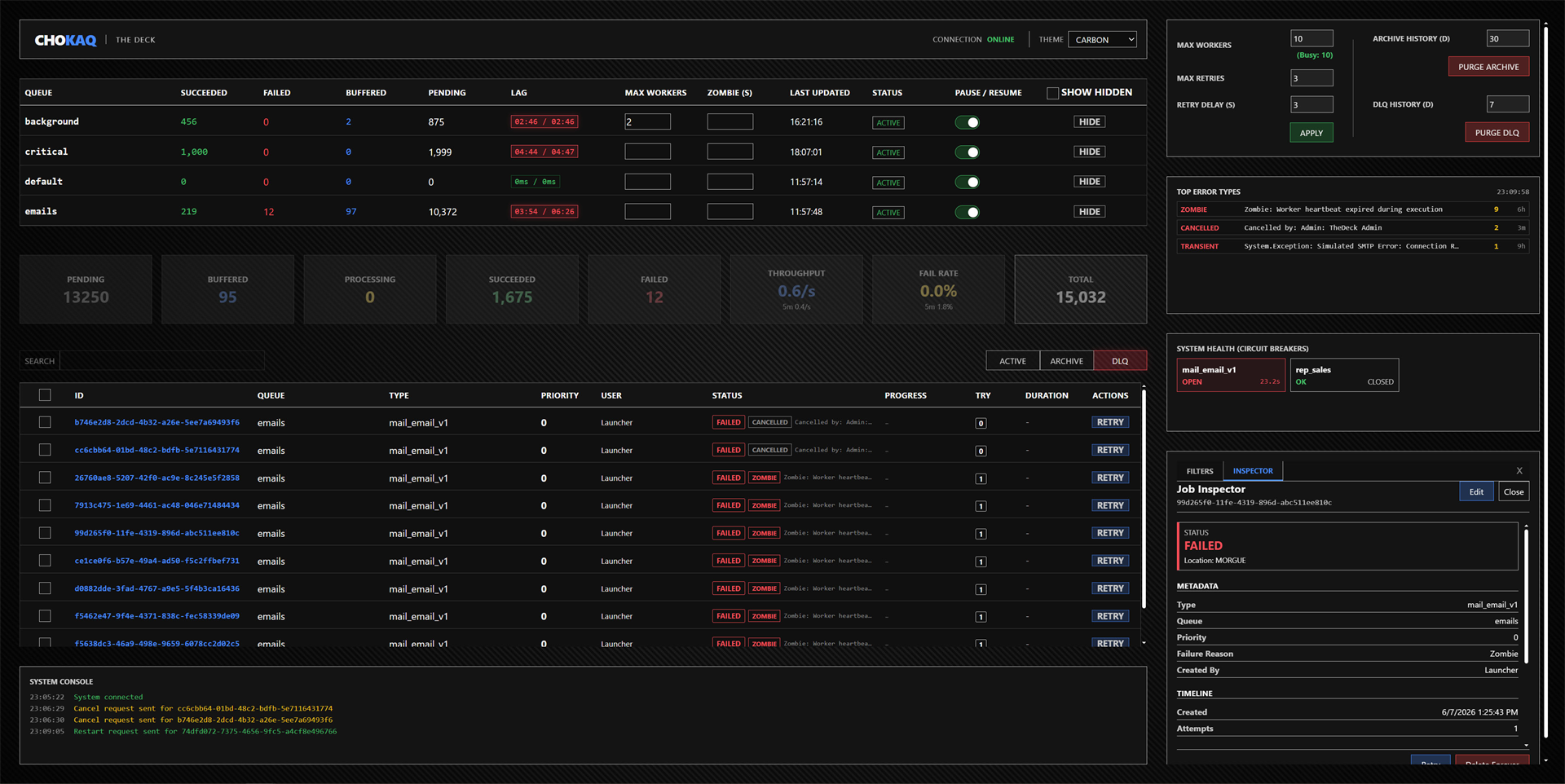
| Action | Meaning | Safety requirement |
|---|---|---|
| Inspect | Read failure reason and payload. | Safe. |
| Edit | Change payload/tags before requeue. | Requires understanding handler contract. |
| Resurrect | Move DLQ row back to Hot. | Safe only if side effects are idempotent. |
| Purge | Permanently delete DLQ row. | Destructive; should require confirmation and policy. |
| Bulk requeue | Requeue many DLQ rows by filter. | Requires tight filters and preview. |
| Bulk purge | Delete many DLQ rows by filter. | Highest-risk operator action. |
Operator Workflow
- Check health and queue lag.
- Identify the queue and type key causing failure.
- Open the DLQ row.
- Read
FailureReasonbefore reading the stack trace. - Decide whether the failure is transient, permanent, stale, duplicate, or a zombie side-effect risk.
- Fix the cause before resurrection.
- Resurrect a small sample before bulk actions.
- Watch throughput and failure rate after requeue.
Architecture Decision
Why this pattern?
Durable background work needs an operator surface because failure is not purely a developer concern. Once jobs are in SQL, the system needs safe ways to inspect and repair them without direct table edits.
Trade-offs
A dashboard introduces authorization, destructive-action safety, and UI correctness responsibilities. The payoff is that production recovery no longer requires ad hoc SQL surgery.
Alternatives considered
| Alternative | Benefit | Cost |
|---|---|---|
| SQL-only operations | No dashboard to maintain. | Error-prone and inaccessible for most operators. |
| Logs-only diagnosis | Easy to add. | Logs do not expose repair actions or current state. |
| External APM only | Good metrics. | Does not own job lifecycle decisions. |
Additional Questions
Why does a queue engine need a UI?
Because DLQ, pause, bulk requeue, and circuit inspection are operational workflows, not just metrics.
How do you prevent accidental destructive actions?
Use authorization policies, typed confirmations, previews, and bounded filters.
What if SignalR is stale?
SignalR is a notification layer. Storage remains authoritative; operators should refresh/read committed state when in doubt.